
Understanding Basement Construction Costs in London

Basement construction in London is a specialist undertaking that requires careful planning, technical expertise, and a clear understanding of the costs involved. With space at a premium across the capital, a well-designed basement conversion or basement extension can transform a property - unlocking valuable living space and increasing long-term value.
However, basement construction costs in London vary widely. Ground conditions, depth of excavation, structural requirements, waterproofing strategy, and access limitations can all significantly influence the overall budget. Many London sites also require temporary works, engineered retaining structures, and careful coordination with neighbours, which further impact cost.
At HYB Construction, we build structurally robust, regulation-compliant basement spaces across London, supporting homeowners from initial feasibility through to final construction. Our experience with complex structural concrete and groundworks enables us to deliver high-quality basements efficiently and safely.
Factors Affecting Basement Conversion Cost in London
A range of factors contributes to the cost of a basement project. Understanding these early can help homeowners prepare accurate budgets and avoid unexpected increases later.
Key cost drivers include:
-
deeper excavations require more structural engineering and temporary works.
-
underpinning, open-cut excavation, or forming a new basement below an existing structure
-
retaining walls, reinforced concrete slabs, internal steelwork, and temporary propping.
-
London clay and high water tables often require advanced waterproofing and drainage.
-
restricted access, narrow sites, or manual spoil removal increase programme duration and cost.
In London, basement construction typically ranges from £2,000 to £6,000 per m², depending on complexity, structure, and waterproofing requirements. Professional fees, such as structural engineer costs and Party Wall surveyor fees, also contribute to the overall project budget.
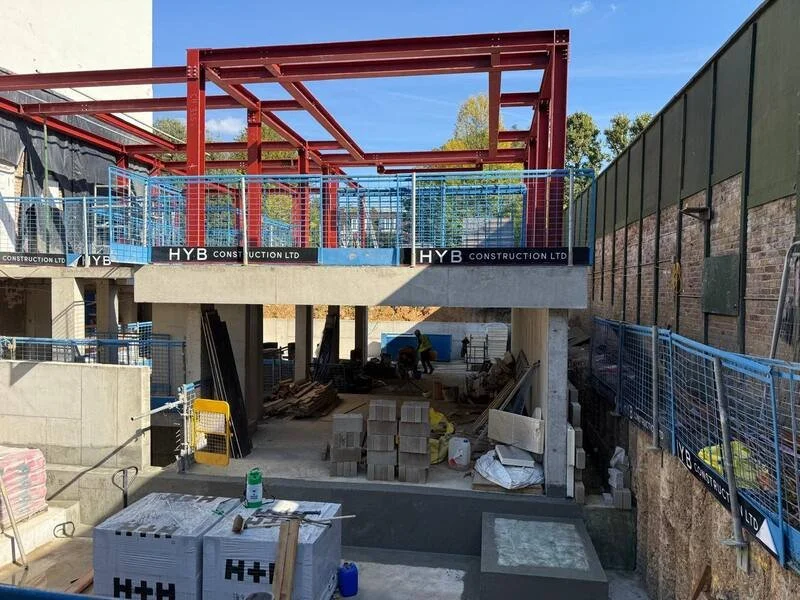
Basement Design and Layout Considerations
A successful basement depends on thoughtful design that balances structure, usability, and comfort. Beyond simply adding square footage, the basement layout must consider natural light, ventilation, insulation, and long-term energy efficiency.
Popular uses for London basements include home gyms, guest suites, cinemas, playrooms, utility rooms, and self-contained rentals. Each type of space has its own structural, mechanical, and electrical requirements.
Key considerations include:
Light and ventilation - through light wells, roof lights, glazing, and mechanical ventilation systems.
Thermal comfort - such as underfloor heating, insulation, and airtightness detailing.
Structural requirements - including reinforced concrete retaining walls and slabs for long-term durability.
Regulatory compliance - fire safety, moisture resistance, ceiling heights, and means of escape.
HYB Construction’s experience in groundworks and structural concrete ensures that basement designs are engineered for longevity, performance, and compliance.
Basement Construction Methods and Waterproofing
Different construction methods suit different properties depending on ground conditions, access, and design ambitions. In London, the most common basement construction approaches include:
In-situ reinforced concrete
Reinforced blockwork
Insulated concrete formwork (ICF)
Waterproofing is one of the most critical aspects of basement construction and must comply with BS 8102. The three main systems are:
Type A – barrier protection
Type B – integral waterproofing using waterproof concrete
Type C – drained cavity systems
Below is a comparison table summarising these approaches.
| Method / System | Overview | Best For | Key Cost Considerations |
|---|---|---|---|
| In-Situ Reinforced Concrete | A continuous reinforced concrete structure formed on site. | Deep basements, complex layouts, long-term durability. | Higher upfront cost; excellent structural performance. |
| Reinforced Blockwork | Concrete blocks reinforced with steel and filled with concrete. | Simpler or shallower basement layouts. | More economical but may need additional waterproofing. |
| Insulated Concrete Formwork (ICF) | Interlocking insulated blocks filled with concrete. | Energy-efficient basements; fast-track construction. | Higher material cost but better insulation. |
| Type A Waterproofing | Membranes or coatings that create a barrier to water. | Low-risk water table areas or used in combination systems. | Cost-effective but sensitive to installation quality. |
| Type B Waterproofing | Waterproof concrete with admixtures and detailed joint systems. | New-build basements requiring robust integrated waterproofing. | Higher design/material cost; reduces reliance on additional systems. |
| Type C Waterproofing | Cavity drainage membranes directing water to a sump pump. | High water tables or maximum-protection scenarios. | Higher installation and pump maintenance cost; very reliable. |
Building Regulations, Planning Permission, and Party Wall Agreements
London basement projects must comply with a range of statutory requirements.
Building Regulations
These cover structural stability, waterproofing, fire safety, ventilation, drainage, and energy performance. Regular inspections take place throughout construction to ensure compliance.
Planning Permission
Planning permission may be required for:
Garden basements
External light wells
Basements extending beyond the existing footprint
Properties in conservation areas
Many boroughs now have specific basement policies, so early clarification is recommended.
Party Wall Agreements
Most basement works in London require a Party Wall Award. Surveyors agree protective measures and record the condition of neighbouring properties, helping to prevent disputes.
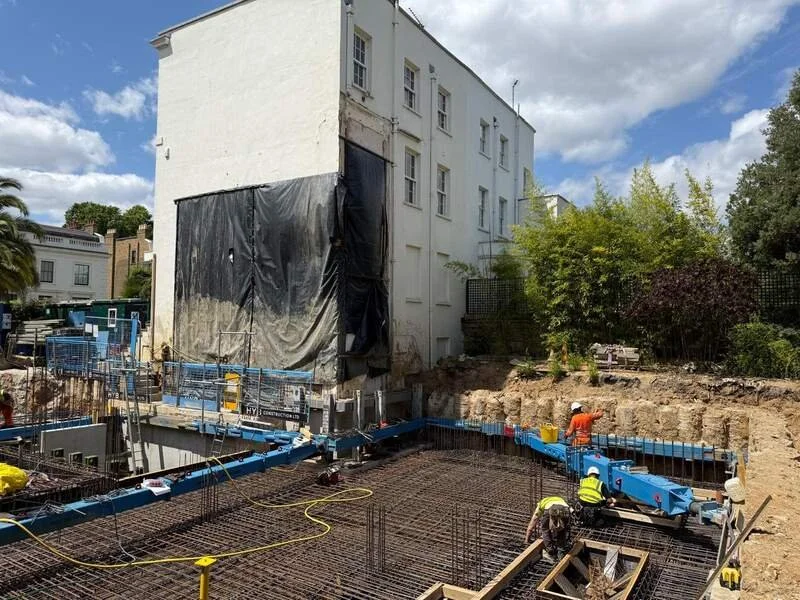
DIY vs Professional Services in London Basement Projects
While finishing touches can often be completed by homeowners, the structural and waterproofing components of a basement must always be carried out by qualified specialists. Errors in underpinning, excavation, or waterproofing can lead to major structural movement, water ingress, and extremely costly remedial works.
HYB Construction provides certified waterproofing systems, warranty-backed structural work, and experienced basement specialists - ensuring safety, quality, and long-term performance.
Increasing Property Value with Basement Conversions in London
A high-quality basement conversion can increase property value by 10–30%, making it one of the most effective ways to add usable space where above-ground extensions are restricted.
Features that boost value include:
Additional bedrooms or multi-use rooms
Natural light from light wells and roof lights
Self-contained rental spaces
High-end finishes and contemporary layouts
HYB Construction helps homeowners maximise both functional space and long-term return on investment through thoughtful design and robust structural solutions.
Thinking About a Basement Project?
If you're planning a basement conversion or want clarity on expected costs, you can learn more about our basement construction services or contact us for your free basement quote.
HYB Construction delivers safe, durable, high-quality basement structures across London - engineered for long-term performance and peace of mind.